
InstaSpin Deposits for UK Players
 Available in GB
Funding an InstaSpin account follows the standard offshore-casino pattern: open an account, choose a payment method visible in the cashier, send a minimum-qualifying amount, and confirm that the balance lands before doing anything else. Independent listings report InstaSpin as supporting fiat and crypto deposits across cards, mobile wallets, e-wallets, bank transfer and major cryptocurrencies, with a minimum deposit of 20 in the source currency for the welcome-offer route. Learn more about instaspin on our main page.
For a UK reader, the first-transaction questions are less about choosing between Visa and Mastercard and more about three layered checks: does the route fit the bonus you plan to claim, does it match the withdrawal direction you will need later, and does the cashier display the currency you expect. The parent payments guide covers the brand-level picture; this page focuses on the deposit step alone.
- Reported InstaSpin deposit categories
- Minimum deposit and currency display
- Choosing the first deposit method
- Bonus opt-ins at the deposit stage
- Crypto deposit considerations
- Deposit choice and future withdrawals
- Common deposit mistakes to avoid
- Deposit records worth keeping
- Deposit size and pacing
- Deposit success is only the first check
Reported InstaSpin deposit categories
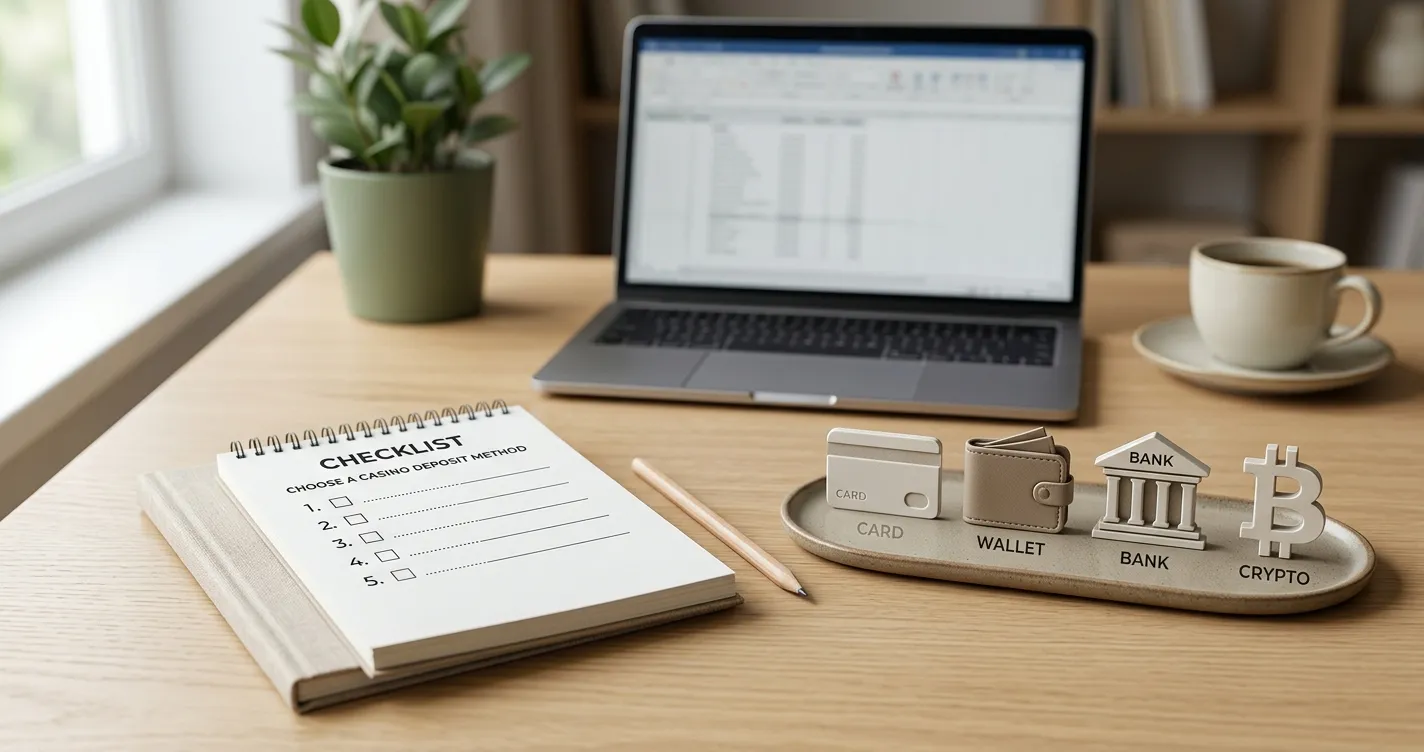
The deposit picture at category level is broad. Cards include Visa and Mastercard. Mobile wallets are listed as Apple Pay and Google Pay. E-wallets reported in third-party listings include MiFinity and Jeton. Bank transfer appears as a standalone route. Cryptocurrency support covers Bitcoin, Litecoin, Ripple or XRP, Tether and Cardano according to multiple sources, with Ethereum mentioned in some listings.
| Category | What is reported | What changes most at the account level |
|---|---|---|
| Cards | Visa and Mastercard. | Issuer-side gambling rules and SCA flows. |
| Mobile wallets | Apple Pay and Google Pay. | Withdrawal-direction availability is the main unknown. |
| E-wallets | MiFinity, Jeton. | Verification at the wallet level and supported currencies. |
| Bank transfer | Standard option. | UK bank-side gambling blocks and processing window. |
| Cryptocurrency | Bitcoin, Litecoin, XRP, Tether, Cardano; Ethereum on some listings. | Network selection and address handling. |
The honest reading of any category list is that visibility on a review page is not the same as availability in a specific UK account on a specific day. The cashier inside the account is the authoritative reference for what is actually live.
Minimum deposit and currency display
Third-party listings consistently report a minimum deposit of 20 in the source currency for the welcome-offer route. The safest public wording is to leave that figure unconverted. Whether the source currency is shown to a UK account as GBP, EUR or another currency depends on cashier configuration and the player’s registered country and currency settings, all of which are visible only inside the account.
For a UK reader, this distinction matters for budget planning: a converted figure produced by a non-UK review can be wrong if InstaSpin shows a different currency to the account. Read the cashier before deciding the first deposit amount, and treat the 20-unit floor as an indicator of order of magnitude rather than a fixed pound figure.
Choosing the first deposit method
The first deposit at any new casino has a different weight from later deposits. It establishes the payment route on the account, sets up the relationship between the cashier and the player’s chosen bank, wallet or crypto address, and — at most casinos — locks in the payment side of the player’s verification picture. A small first deposit on the route the player intends to use long-term tends to produce fewer surprises than a large first deposit on a route that turns out to behave differently than expected.
Two practical considerations come up at the first-deposit moment. First, a UK card issuer may decline a gambling transaction outright or treat it as a cash advance with associated fees; a quick call to the issuer or a check of the card’s recent T&Cs avoids that surprise. Second, e-wallets and crypto routes require their own verification at the wallet or exchange side, and a deposit attempted before that step has been completed can sit pending or be rejected.
Bonus opt-ins at the deposit stage
If a player intends to claim the InstaSpin welcome offer, the deposit moment is also the bonus moment. The package is reported as a three-deposit structure with welcome-offer wagering at 30x deposit plus bonus and a minimum deposit of 20 in the source currency. Opting into the bonus typically happens in the cashier flow itself, either through a checkbox or by entering a bonus code where one is shown in the active promotion.
For a player who plans to claim the bonus, the safer sequence is: read the live promotion in full first, set a personal limit, decide which deposit stage applies, then enter the cashier. For a player who prefers cash play, declining the bonus at the deposit moment keeps wagering targets and game-eligibility rules off the balance entirely. The decision can also be made per-deposit — a first deposit with the bonus opted in does not commit the second deposit to the same path. The dedicated InstaSpin welcome bonus guide covers each stage.
Crypto deposit considerations
The InstaSpin cashier supports several major cryptocurrencies. The advantages on the deposit side are speed once the network confirms the transaction, the absence of an issuer who might block the payment, and broad availability across geographies. The trade-offs are exchange-rate risk between deposit and withdrawal, network selection (sending BEP-20 tokens to an ERC-20 address, for example, can lock funds), and the fact that the player carries operational responsibility for address accuracy.
Two checks reduce most crypto-deposit problems. First, copy the deposit address shown in the cashier directly rather than transcribing it manually, and verify the first few and last few characters on the wallet side before confirming the send. Second, use a small initial transaction to confirm the path works end-to-end before sending a larger amount; the time cost is minor compared with the cost of a misrouted send.
Deposit choice and future withdrawals
A deposit method is also, implicitly, the player’s first proposal for a withdrawal method. Many casinos require withdrawals to follow the same route as deposits, particularly the first time funds move outward. That is one reason the deposit decision is harder to undo than it looks: choosing a card for the first deposit, only to discover that withdrawals to that card are slow or unavailable, leaves the player either accepting the slow route or going through additional verification to add a new payout method later.
If a withdrawal route is the player’s actual concern, the cleaner approach is to choose a deposit method that doubles as the desired withdrawal route. E-wallets and crypto routes both score well on that axis; cards can score less well; bank transfer is reliable but slow in both directions. The detailed payout-side picture sits on the cashout checks page.
Common deposit mistakes to avoid
- Depositing from a card that belongs to a partner, parent or housemate rather than the account holder.
- Converting a reported non-GBP minimum into pounds without confirming the cashier currency for your account.
- Opting into a welcome-bonus stage without reading the wagering basis first.
- Sending crypto to the deposit address on the wrong network, or transcribing the address manually.
- Depositing more than the planned budget because the welcome package would unlock more value at a higher stage.
- Treating the first deposit as a low-stakes test on a route the player will not actually use long-term.
Deposit records worth keeping
Keeping a small record of each deposit is more useful than it sounds. Date, amount, currency shown in the cashier, method used, transaction reference and any bonus opted into are the six fields that resolve most support-side disputes later. A screenshot of the cashier confirmation page is usually enough; the record does not need to capture sensitive details such as full card numbers, and it should not.
The same records help on the account side, particularly if a withdrawal is reviewed against deposit history. Casinos sometimes verify that withdrawals match deposit method ownership, and a clear record speeds that check. The account guide covers the broader profile-consistency picture.
Deposit size and pacing
A deposit should reflect the budget the player set before opening the cashier, not the maximum stage of a bonus the casino happens to offer. The two are easy to confuse during a welcome flow that advertises a 1000-money headline across three deposits. Three modest deposits at the level the player would have made anyway is a sound use of the package; three larger deposits aimed specifically at unlocking the headline ceiling is a sign that the package is leading the decision rather than supporting it.
The honest pacing test is whether the second and third deposits would have happened without the bonus offer. If the answer is yes, the staged structure is adding value. If the answer is no, the stages should be left unclaimed and the balance kept where it is. You may also find InstaSpin Withdrawal Guide for UK Players interesting.
Deposit success is only the first check
A successful deposit confirmation is not the same as a successful round trip. Funds visibly landing in the cashier confirms the deposit side; what they unlock — bonus tracking, game eligibility, wagering progress, eventual withdrawal route — is the harder picture. A UK reader who treats the deposit as the first quarter of the journey rather than the finishing line tends to make more measured decisions than one who treats it as the main event.
For the wider context that surrounds any first deposit, read the main review, then the withdrawal guide before the first cashout request.
Created by the ”Instaspin” editorial team.